
CHICAGO — Sports have become a big part of the prediction markets. So big that even sportsbooks have moved into the business.
The rapid growth of sports betting on prediction markets — known as event contracts — has caught the attention of the four major North American sports, along with the NCAA and other organizations. Kalshi and Polymarket are the two biggest platforms, but they have plenty of company. More are on the way too.
Some leagues have jumped at another revenue opportunity, while others have expressed concerns about the regulation of prediction markets. But the money keeps rolling in. Kalshi reported a daily record of more than $1 billion in total trading volume on Super Bowl Sunday, an increase of more than 2,700% over last year.
Nearly eight years after a Supreme Court ruling paved the way for legalized sports betting across the country, the rise of sports prediction markets has received a mixed response.
“I think (teams and leagues) had a seat at the table to some extent in terms of how states would legalize sports betting,” said Stephen Shapiro, a professor of sports and entertainment management at the University of South Carolina, “how they’re going to be regulated, who’s going to be able to get licensed to play.
“I think they have a lot less sense or understanding of prediction markets.”
However, the Nevada Control Board considers prediction market contracts to be a form of sports betting and has taken several steps to prevent markets from operating in the state without a gambling license.
Learn about prediction markets
Prediction markets provide an opportunity to trade – or bet – on the outcome of future events. They rose to prominence in politics, but the range of typical yes-or-no questions includes everything from the weather to the Best Picture Oscar.
When the U.S. captured Venezuelan President Nicolás Maduro last month, an anonymous trader made more than $400,000 after betting that Maduro would soon be gone — raising suspicions of potential insider trading because of the timing of the bets and the trader’s limited activity on Polymarket.
Cardi B’s performance during Bad Bunny’s Super Bowl halftime show, especially if it constituted a performance, turned into a headache for both Polymarket and Kalshi.
Prediction markets consist of event contracts, with prices linked to what traders are willing to pay, theoretically indicating the perceived likelihood of an event occurring. The buy-in for each contract ranges from $0 to $1 each, reflecting a 0% to 100% chance of what traders think might happen. This differs from legal sportsbooks, which set odds and pay out the winners themselves.
Matthew Bakowicz, a former sportsbook executive who serves as program director for the sports business management track at American University’s Kogod School of Business, said it works like the options market.
“You’ve found a partner on the other side who is willing to trade that contract or that offer. They’re a market maker,” Bakowicz said. “They’ve said I’ll trade you the 100 contracts for 70 cents just like a brokerage. … It’s a person-to-person environment that’s a little different than the normal sports betting that you’d see.”
Prediction markets are overseen by the Commodity Futures Trading Commission, while sports betting falls under the jurisdiction of state governments. According to the American Gaming Association, an industry group that represents casinos and sportsbooks, 39 states and the District of Columbia have at least some form of legalized sports betting.
In most states with legal sports betting, it is limited to ages 21 and older, while prediction markets are open to 18- to 20-year-olds with some exceptions. Prediction markets also exist in states where sports betting is illegal, including Texas and California.
There are several active legal cases involving issues such as state law versus federal oversight and the definition of the word “gaming.” At stake is how prediction markets are regulated and where they are allowed to operate.
The situation is expected to reach the Supreme Court at some point.
“The way these prediction market companies have differentiated sports betting from prediction markets is by positioning themselves as an exchange that hosts a peer-to-peer platform, whereas sports betting has traditionally been conducted in a proprietary betting system, where the betting company is on the other side of the betting,” said Daniel Wallach, a prominent sports betting attorney.
“But it’s a distinction without a difference here, because I think it’s widely recognized in the gaming world that exchange betting is one way in which gambling can occur.”
Kalshi has argued in court that the CFTC has “exclusive jurisdiction” over his sporting event contracts because the agency is responsible for regulating derivatives markets under the Commodity Exchange Act. The CFTC has a regulation that prohibits an event contract “that involves, relates to, or refers to terrorism, murder, war, gambling, or an activity that is illegal under any state or federal law,” but Kalshi has argued that the federal agency should decide how it interprets and applies its rules.
“A focal point of this whole thing, it’s a word and is the word gaming and that’s how this organization, you know, the CFTC defines it,” Bakowicz said.
The sports landscape
Major sports organizations have responded to the growing popularity of prediction markets in a variety of ways.
The NHL announced multi-year partnership agreements with Kalshi and Polymarket in October. Under the agreement, the league has the right to reject specific event contracts, and Kalshi and Polymarket agreed to privacy provisions similar to the NHL’s approved sportsbooks.
The Chicago Blackhawks announced a deal with Kalshi in December, becoming the first professional sports franchise to partner with a prediction market.
Bill Miller, president and CEO of AGA, called the NHL’s partnership with Kalshi and Polymarket “deeply troubling.” The AGA has accused prediction market platforms of using sporting event contracts “to circumvent state regulations and ignore the voices of voters and elected leaders at the state level.”
Major League Soccer announced a partnership with Polymarket on January 26. The deal “includes safeguards designed to protect the integrity of MLS and Leagues Cup matches,” according to the league.
The NFL, NBA and Major League Baseball have expressed concerns about the regulation of contracts for sporting events. But there has been some movement on several fronts.
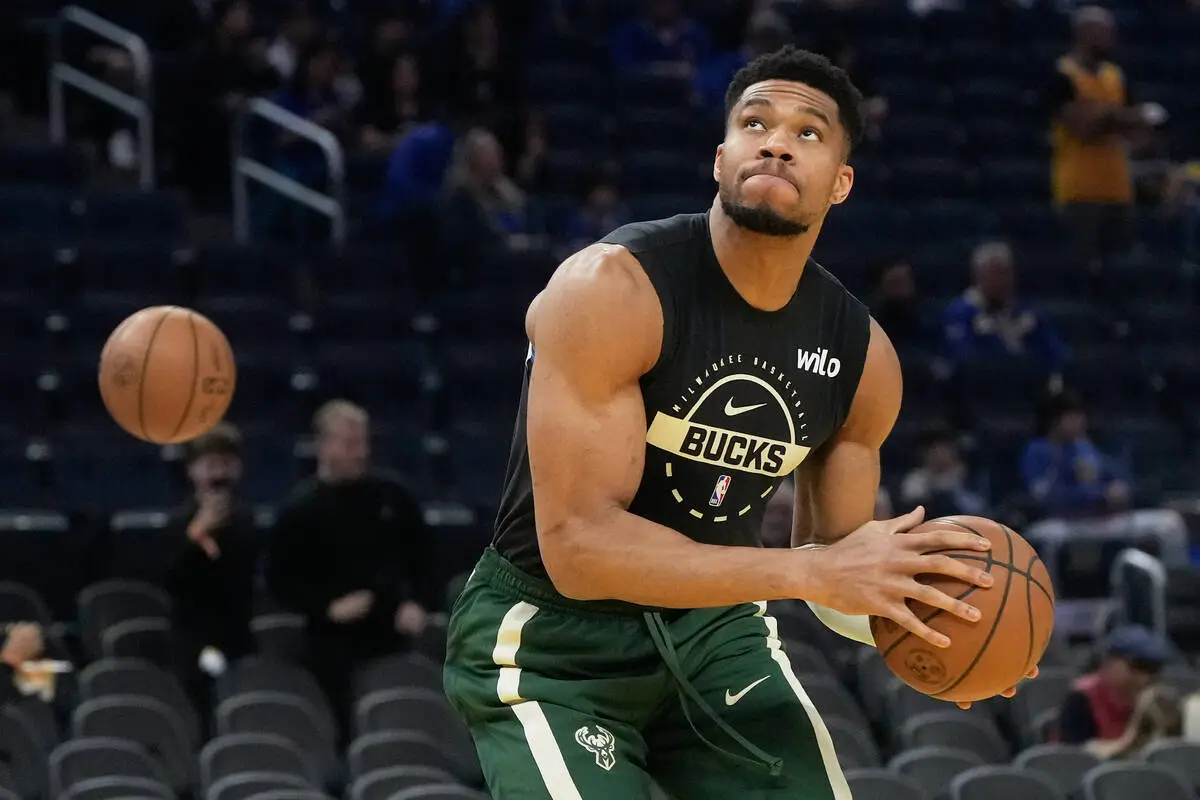
Giannis Antetokounmpo, one of the NBA’s biggest stars, has become a shareholder in Kalshi. The league had a panel on prediction markets on the schedule for its All-Star Technology Summit on Friday in Los Angeles.
The NBA has not responded to repeated requests for comment on Antetokounmpo’s deal.
MLB had a presentation on prediction markets during its owners meetings this week in Florida.
“The interesting thing about the prediction markets is that there is an opportunity to work with the Commodities Futures Trading Commission,” MLB Commissioner Rob Manfred said. “If you got to where you wanted to be, you’d have nice federal regulation to be the same everywhere.”
In written testimony submitted to the House Committee on Agriculture in December, NFL vice president Jeff Miller said the league has no plans to participate in prediction markets.
The NCAA has asked the CFTC to pause event contracts for college sports “until the agency implements appropriate rules,” it said in a Jan. 14 release.
“The answer cannot be the status quo. We need a set of fair, transparent standards,” NCAA President Charlie Baker said.