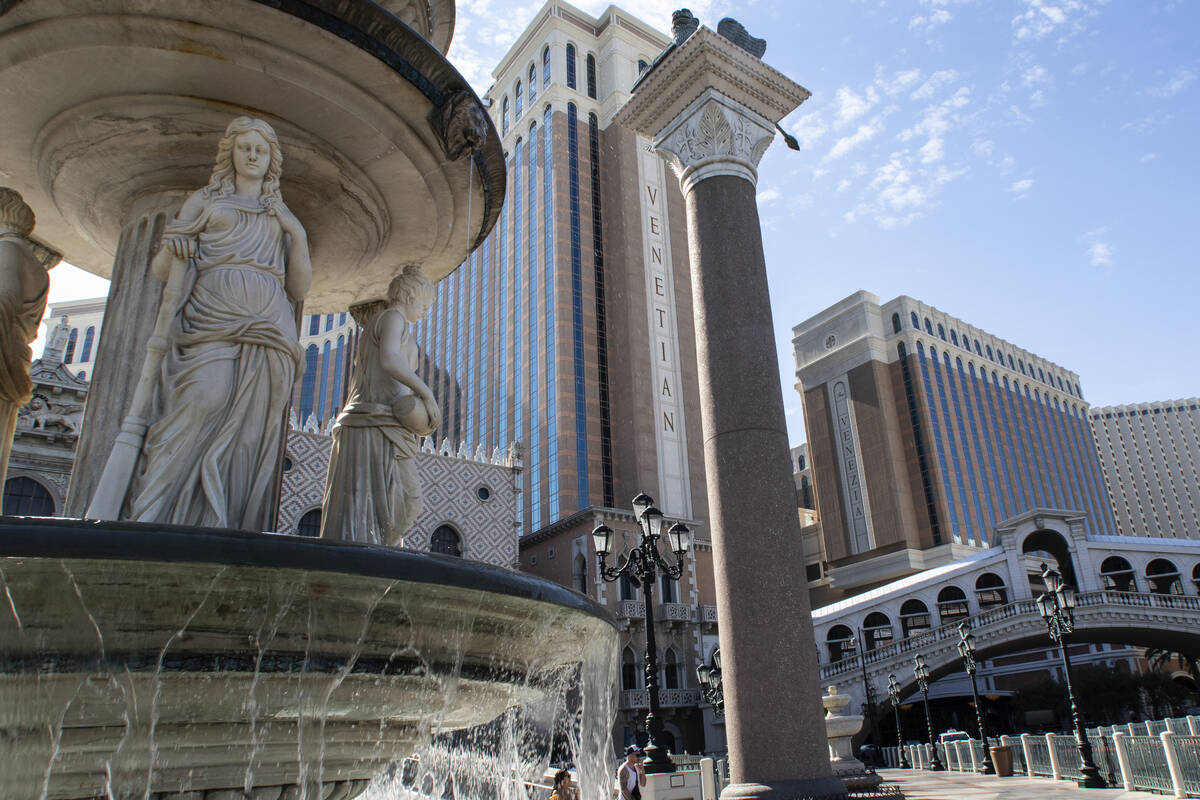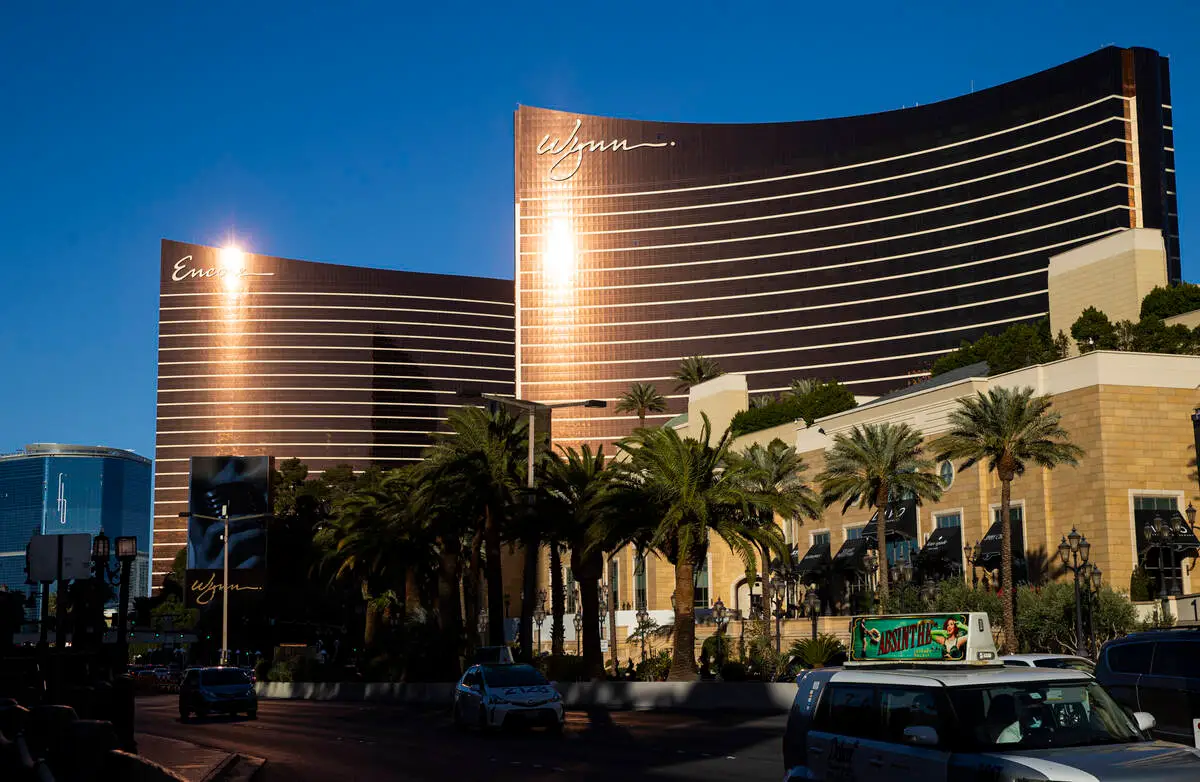

The Strip’s largest casino operator is rolling out the red carpet for some of its high-rollers who aren’t gambling.
The Fountain Club by MGM is an invitation-only rewards program designed for “high-value, non-gaming guests,” according to an MGM Resorts International spokesperson. The Fountian Club by MGM program includes benefits such as personal concierge service, exclusive event invitations, priority booking across MGM properties, premium ticket access, luxury suite booking privileges, complimentary airport transfers and VIP check-in.
Selected guests were contacted late last year and recently received Fountain Club by MGM rewards cards in a gold-trimmed gift box. Additional invitations may be sent this year to qualified guests, the company said.
MGM declined to say how many guests are enrolled in the Fountain Club program.
The program is still in a “soft launch” phase, but “the early response so far has been incredibly positive from our guests,” the spokesperson said.
The city’s embrace of large-scale, non-gaming events, such as the Super Bowl and Formula One Grand Prix, has broadened its appeal to a non-gaming demographic. The impact of these events has been beneficial for Strip properties, including those operated by Las Vegas-based MGM, which oversees nine casinos and four non-gaming hotels along the resort’s corridor.
“The development of the Fountain Club reflects a long-standing trend we’ve seen among Las Vegas visitors who are increasingly drawn to non-gaming experiences from luxury accommodations and dining to entertainment and events,” said Joey Wattoo, chief marketing officer for MGM. “The program underscores our ongoing commitment to recognizing and rewarding these valued guests by unlocking enhanced access to exclusive amenities and experiences.”
Risk taking conference
UNLV is calling for presentations for May’s International Conference on Gambling and Risk Taking, a gathering of academics, researchers and experts from all fields at the Bellagio discussing the nuances of gambling.
Held once every three years, the May 26-28 event brings together thinkers and theorists to discuss all aspects of gambling and risk-taking.
The deadline for abstracts is January 23 and prospective presenters will be notified in February.
In 1974, a founder in the field of gaming, Dr. Bill Eadington, a small group of thinkers to explore the overlooked topic of gambling and risk-taking. In more than 50 years since, the conference has grown into the world’s largest multidisciplinary gathering of game researchers and practitioners. More than 550 participants from over 30 countries participated in the 19th edition, and in 2026 UNLV hopes to welcome even more.
Abstracts are invited on all topics related to gaming and the commercial gaming industry, including the economics of gaming, business impacts and analytics, social and societal impacts, history of gambling, criminology and illegal gambling, problem gambling or disordered gambling, mathematics of gaming, AI and machine learning, sports and gaming, prediction markets, esports and payments, payments and money gambling.
Paper presentations should be approximately 20 minutes, including question time and academic or applied in nature. Poster presentations are ideal for work in progress and support for more informal interactive discussions.
Maine legalizes online casinos
Maine will become the eighth state to legalize online casinos after Gov. Janet Mills allowed a tribal-exclusive iGaming bill to go into effect without her signature. The law, LD 1164, gives the state’s four Wabanaki tribes exclusive rights to operate online casinos at an 18 percent tax rate.
It will take effect three months after the legislature adjourns on April 15.
Mills said she remains concerned about the game’s public health impact but believes regulation is preferable to an unregulated market. She also noted that the new revenue stream is intended to support the Wabanaki Nations, reflecting her position in legalizing sports betting in 2022.
The tribes already have exclusive control of Maine’s online sports betting market, with three partnering with Caesars and one with DraftKings. Government analysts project that iGaming could generate up to $100 million in tax revenue in the first decade.
However, the Maine Gambling Control Board urged Mills to veto the bill, warning that excluding the state’s two commercial casinos could cost jobs and reduce tax revenue.
Resistance is also forming outside the state house. The National Association Against iGaming — which includes Churchill Downs, a casino operator in Maine — has threatened a “people’s veto,” a referendum that could overturn the law if enough signatures are gathered for the 2026 ballot.
Maine’s move comes as online casino expansion has slowed nationally, though budget pressures may prompt more states to take another look in 2026. Legislators in Virginia and Indiana are already signaling renewed interest in iGaming.
Contact David Danzis at ddanzis@ theplayerlounge.com or 702-383-0378. Follow @AC2Vegas_Danzis on X.
–