
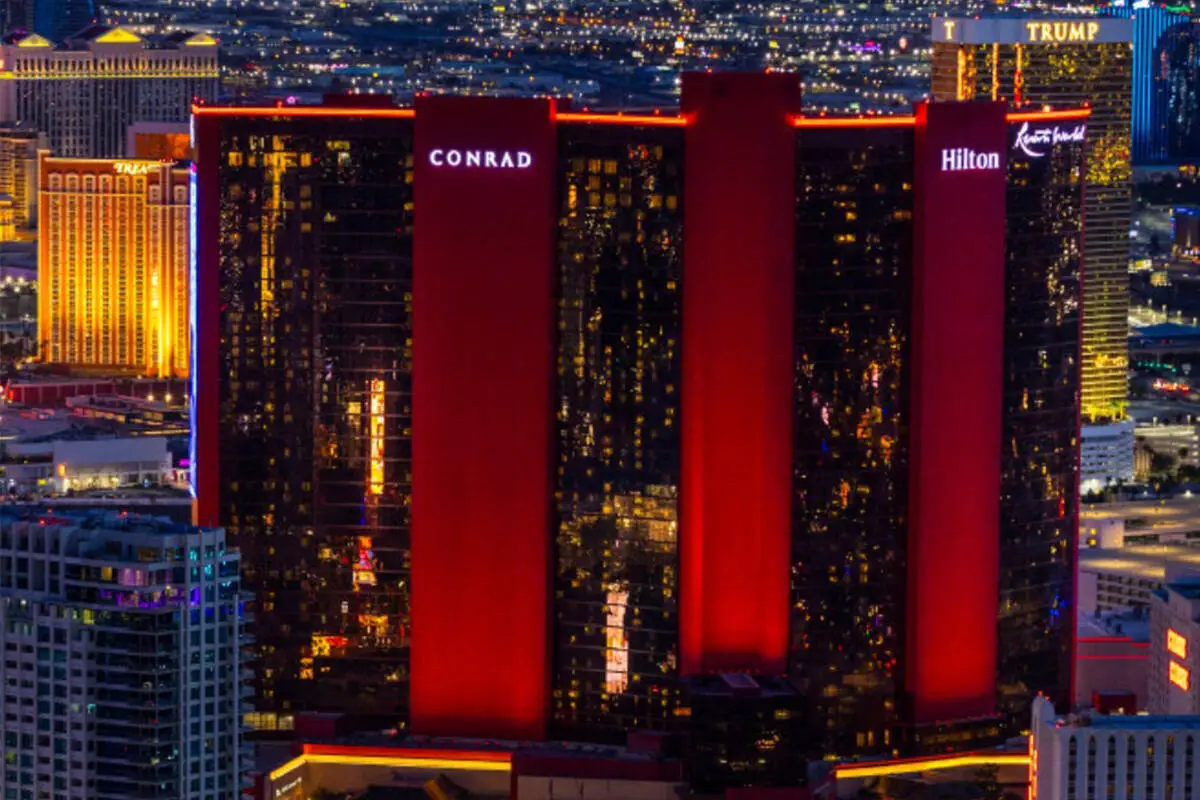
A new civil RICO lawsuit filed in federal court last week is reviving scrutiny of Resorts World Las Vegas and several people connected to the property’s early operations.
The 95-page complaint, filed by high-stakes gambler Robert “RJ” Cipriani and investor James Russell, alleges that Resorts World and its parent company, Genting Berhad, condoned or enabled activity that the plaintiffs describe as an racketeering enterprise during the casino’s first year on the Strip.
The lawsuit names a wide range of defendants: Genting Berhad; Resorts World Las Vegas; former chairman KT Lim; former RWLV President Scott Sibella; Las Vegas attorney David Chesnoff; former Chief Compliance Officer Matthew Forbes; supervisory employees Joseph Tatonetti and Tonya Henderson; former casino host Doni Taube; hotel employee Elie Samarani; and convicted fraudster Brandon Sattler, whose behavior is a central focus of the filing.
According to the complaint, Cipriani claims he repeatedly warned Resorts World staff in 2021 of suspicious activity involving certain players, including Sattler, and claims he was retaliated against for raising those concerns with both the casino and the police. The lawsuit points to Cipriani’s November 2021 arrest on the casino floor, which was later dismissed, as evidence of efforts to silence him.
The complaint alleges that Chesnoff “arranged and masked investments in Resorts World’s operations on behalf of known criminals and prohibited persons,” and that Sibella “approved” of these arrangements and received “a piece of the action.”
When reached for comment on Tuesday, Sibella called the complaint “ridiculous” and said it “has no merit whatsoever.”
A spokesperson for Resorts World Las Vegas issued the following statement: “We typically do not comment on pending litigation, but this lawsuit repackages old cases and is yet another attempt to bring negative attention to Resorts World Las Vegas and seek some form of compensation. We will vigorously defend ourselves against this frivolous action.”
Chesnoff and Genting did not respond to requests for comment on the lawsuit.
Russell, meanwhile, alleges that Resorts World allowed Sattler to invest millions of dollars in investor funds without proper anti-money laundering screening, contributing to Russell’s losses on a more than $10 million loan to Sattler. Sattler was later convicted in an unrelated investment fraud case and is serving a federal sentence.
The trial is largely based on already decided regulatory cases. In March, state gaming regulators fined Resorts World $10.5 million for AML and record-keeping errors dating back to the same period described in the lawsuit. Sibella, who vacated the property before the enforcement action, later pleaded guilty in a separate federal case involving an AML violation during his time overseeing the MGM Grand and subsequently lost his Nevada gaming license.
The new filing contains no new criminal charges, and civil RICO cases have a high standard of proof.
Wynn UAE analysis
Gaming industry analysts who visited the Wynn Al Marjan Island construction site last week were impressed and expect the new resort being built in the United Arab Emirates to be a hit for the company.
In separate reports to investors, US-based analysts cited several reasons why they believe the new resort – the first with legalized gaming nationwide – will generate high levels of gross gaming revenue.
“For Wynn, the purpose of the tour was for investors to ‘see what they see,’ with Wynn Al Marjan Island a compelling development project that should also benefit from the secular tailwind of global wealth and ultra-high-net-worth individuals moving to the UAE,” JP Morgan analyst Daniel Politzer wrote. “To that end, mission accomplished.”
“We come away from the Dubai-Ras Al Khaimah-Wynn Al Marjan Island meetings and tours incrementally positive on the opportunity and, therefore, on Wynn shares, given the increased detail,” added analyst David Katz of Jeffries. “The key success factors for integrated localities – macro, governance, infrastructure – are generally favorable by historical standards.”
The project has a budget of $5.1 billion, of which 67 percent is either spent or completely bought out. An estimated 18,000 construction workers are on site each day with 100 percent of the tower’s structural concrete completed and 70 percent of the tower facade’s exterior glazing completed. The bulk of the work from the fourth quarter through the first quarter of 2027 will be interior design and furniture, fixtures and equipment.
“The customer base is expected to include UAE locals (100,000 millionaires live within a three-hour drive of Wynn Al Marjan Island), followed by tourists from Saudi Arabia, Bahrain, Kuwait, Oman and Qatar, as well as Russia-Eastern Europe, India and China,” Politzer said.
He said the region reminds him of Singapore, where two gaming companies offer real estate to locals as well as thousands of tourists and conference attendees.
Analyst Steven Pizzella of Deutsche Bank said it is Wynn’s biggest project since the construction of Wynn Palace on Macau’s Cotai Strip.
The property is expected to open in 2027 with 1,500 slot machines and 265 table games. By comparison, Wynn Las Vegas has 1,575 slots and 235 tables. Reinvestment is expected to be limited for locals and competitive for international inbound visitors, but given that the UAE is a monopoly market, promotion levels are likely to be well below Macau and Las Vegas.
Contact David Danzis at ddanzis@ theplayerlounge.com or 702-383-0378. Follow @AC2Vegas_Danzis on X.
–