
The semi-finals of the 2026 Australian Open delivered two five-set marathons that pushed the physical and mental limits of the sport and set up some finals that would have been predicted at the start of the fortnight.
Carlos Alcaraz reached his first Australian Open final after surviving the longest semi-final in the tournament’s history, outlasting Alexander Zverev in a brutal five-hour, 27-minute epic that swung repeatedly on momentum, fitness and nerve.
Later in the evening, Novak Djokovic turned back the clock in a four-hour battle with Jannik Sinner, saving break points at will and snapping a five-match losing streak against the reigning champion to reach his first Grand Slam final since Wimbledon 2024.
Two matches, nearly ten hours of tennis and a final pitting the world No. 1 against the most decorated player the sport has ever seen. Will they both make it physically? Let’s hope so.
Australian Open 2026 Day 13 Semi Final Results
| Winner | Loser | Score line |
|---|---|---|
| Carlos Alcaraz (1) | Alexander Zverev (3) | 6-4 7-6(5) 6-7(3) 6-7(4) 7-5 |
| Jannik Sinner (2) | Novak Djokovic (4) | 3-6, 6-3, 4-6, 6-4, 6-4 |
Summary of the semi-finals
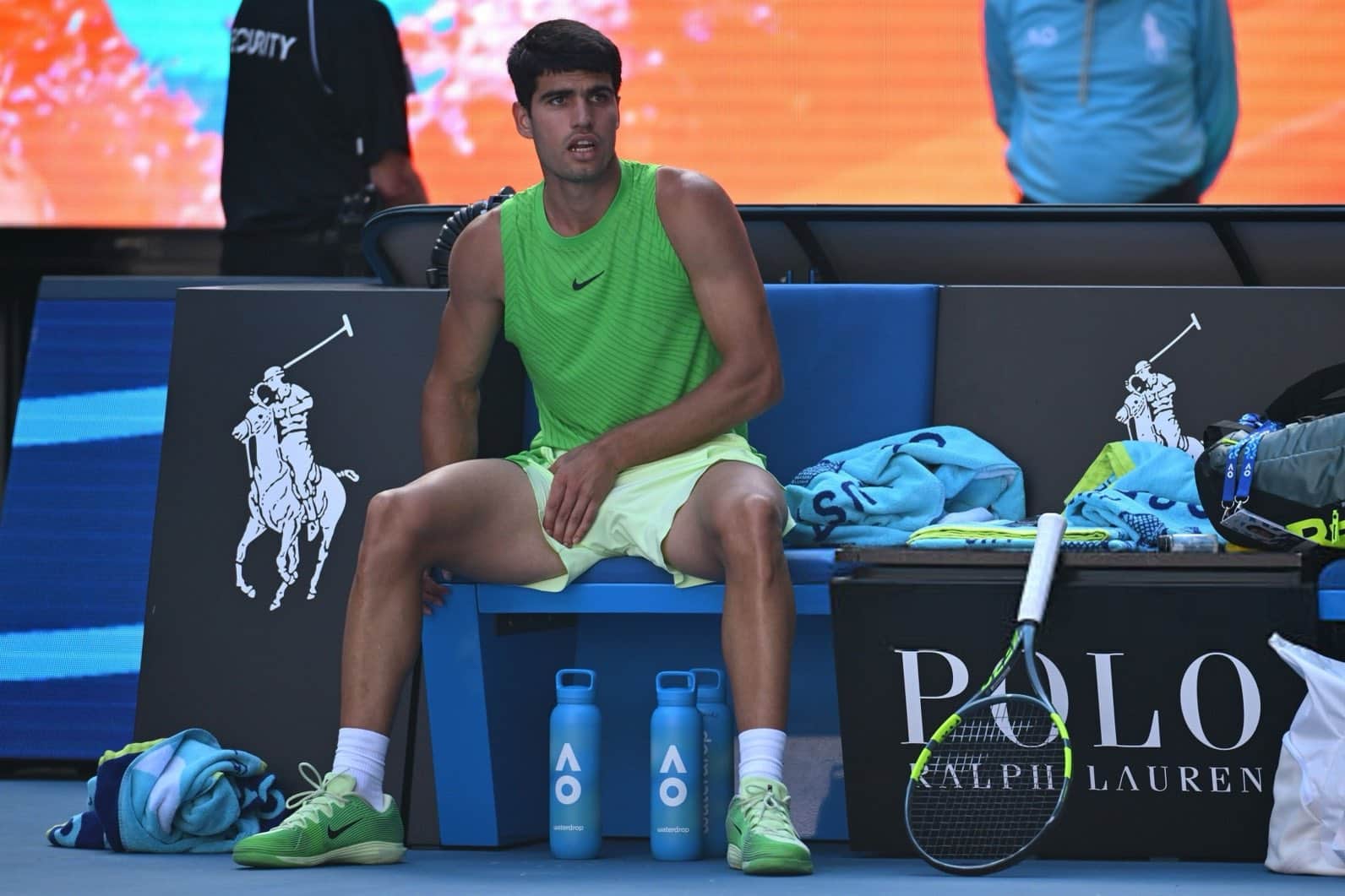
Carlos Alcaraz (1) def. Alexander Zverev (3) 6-4 7-6(5) 6-7(3) 6-7(4) 7-5
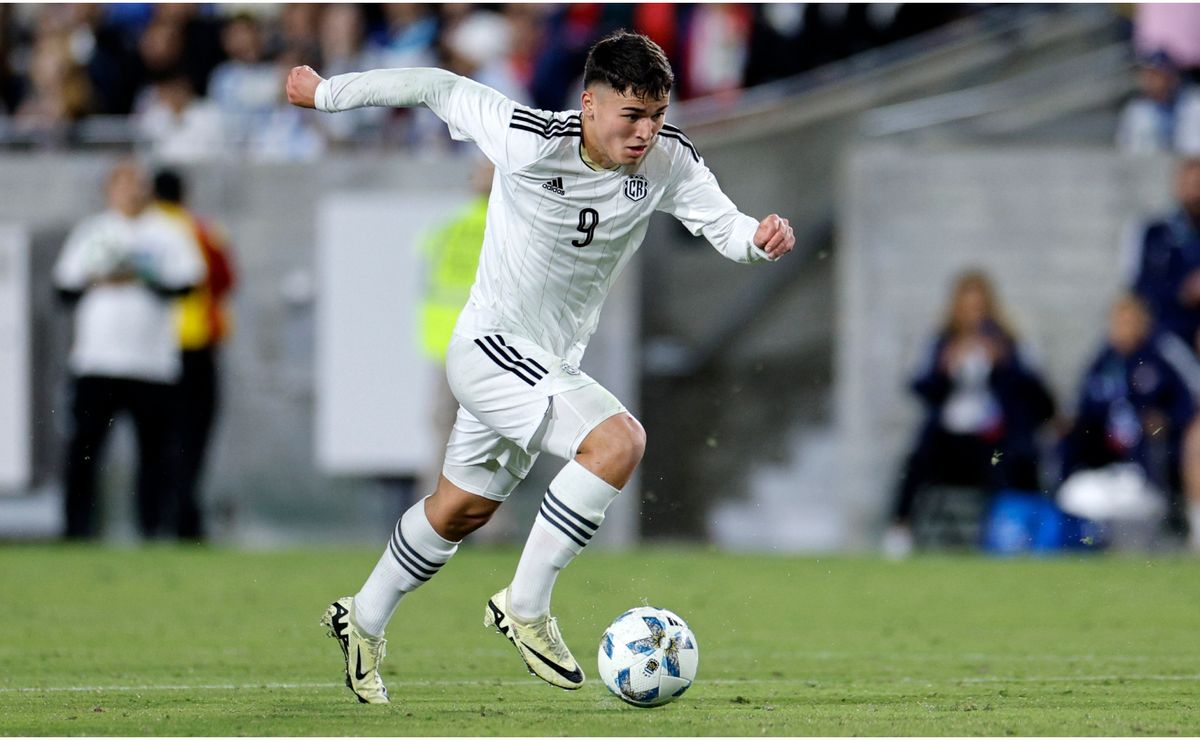
Carlos Alcaraz reached his first Australian Open final after a dramatic and physically demanding match, defeating Alexander Zverev in the longest semi-final in the tournament’s history.
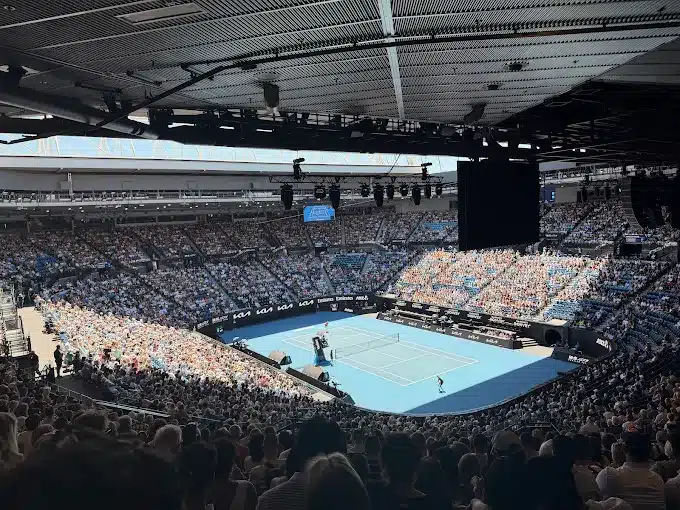
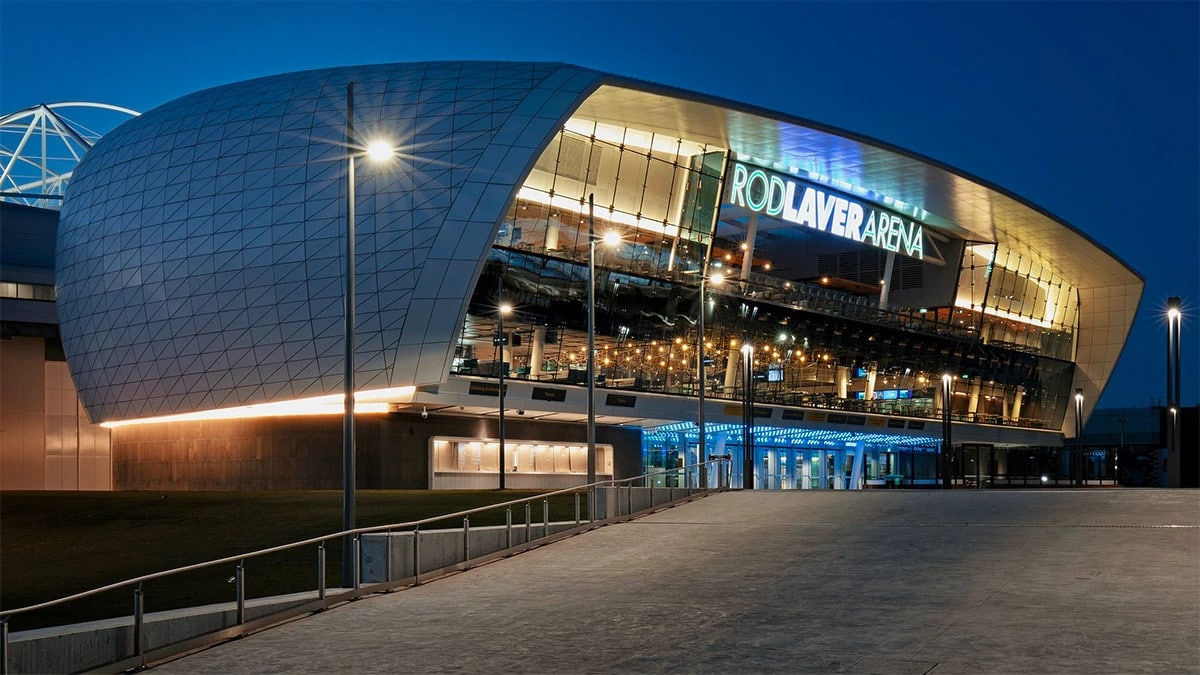
The world number 1 and top seed prevailed 6-4, 7-6(5), 6-7(3), 6-7(4), 7-5 after an epic five hours and 27 minutes at Rod Laver Arena.
Alcaraz overcame cramps that appeared late in the third set, rallied from 3-5 down in the deciding set and sealed victory with a powerful forehand pass on match point, collapsing to the court in celebration as Zverev’s volley landed in the net.
The match started with Alcaraz in full control, taking the first set and then rallying from 2-5 down to take the second set tiebreak.
At 4-4 in the third set, however, Alcaraz seemed to pull up strongly during the serve, hampered by the leg problem. He received treatment twice from the physio and visibly struggled as Zverev fought back, forcing two tiebreak wins to level the match.
Zverev then broke early in the fifth set and, after saving five break points over three of his own service games, served out the match at 5-4.
Alcaraz, moving freely again and summoning remarkable resilience, broke back and reeled off four straight games to book his place in Sunday’s final. He is now 15-1 when pushed to five sets.
For Zverev, the defeat may look like another painful chapter in the quest for a first Grand Slam title, but I actually think the tournament was positive for him and even better than last year, even though he played the final 12 months ago.
He hit his groundstrokes much better in Melbourne than most of last year. He has lost games by not being aggressive enough in the past, but this one was lost because he ran on fumes in the fifth.
I can imagine his biggest regret will be that he didn’t win sets 3 and 4 in double quick time, to really put the hammer down, and that the second set really should have gone his way.
Many players and fans are also questioning why Alcaraz was granted a medical timeout for what was clearly a cramp, which is not allowed.
Some will point to the heat rule and say the cramps were a manifestation of heat-related illness, in which case a player could receive treatment, but I don’t really buy that argument.
“He’s having seizures. This is absolute bullshit. It’s unbelievable. You can’t be serious. You’re protecting them both. It’s unbelievable.”
He’s not the first to do it, and he won’t be the last. But there are really only 2 players on tour right now who can get away with moves like that, and I think Zverev has a good point.
Did he waste energy complaining about it? Maybe, but both things could be true.
Match statistics
| Key statistics | Carlos Alcaraz | Alexander Zverev |
|---|---|---|
| Winner | 78 | 56 |
| Unforced errors | 58 | 55 |
| Ace | 12 | 17 |
| Double mistake | 5 | 4 |
| 1st serving percentage | 65% (121/187) | 72% (149/207) |
| 1st Serve point won | 74% (89/121) | 71% (106/149) |
| 2nd serve point won | 62% (41/66) | 53% (31/58) |
| Breakpoints saved | 71% (5/7) | 71% (10/14) |
| 1st return point won | 29% (43/149) | 26% (32/121) |
| 2nd return point won | 47% (27/58) | 38% (25/66) |
| Break point won | 29% (4/14) | 29% (2/7) |
| Return game | 14% (4/29) | 7% (2/29) |
| Pressure points | 43% (9/21) | 57% (21/12) |
| Service points | 70% (130/187) | 66% (137/207) |
| Return points | 34% (70/207) | 30% (57/187) |
| Net points | 78% (35/45) | 56% (31/55) |
| Total points | 51% (200/394) | 49% (194/394) |
| Match point saved | 0 | 0 |
| Max points in a row | 7 | 7 |
| Total game | 53% (31/58) | 47% (27/58) |
| Max games in a row | 4 | 3 |
Highlights
Press conferences
Novak Djokovic (4) def. Jannik Sinner (2) 3-6, 6-3, 4-6, 6-4, 6-4
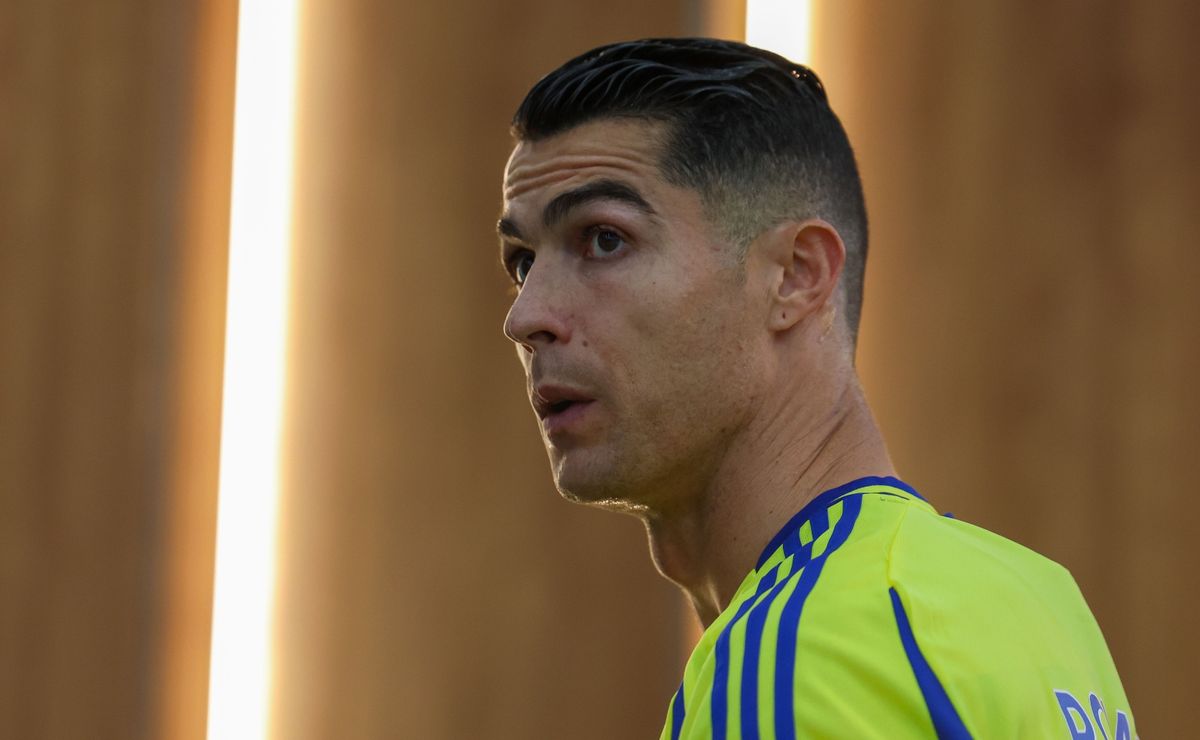
Novak Djokovic turned back the clock in the early hours of Saturday, producing a defiant and masterful performance to end his five-match losing streak against Jannik Sinner and reach his first Grand Slam final since Wimbledon 2024.
The 38-year-old Serbian legend battled past the two-time defending Australian Open champion 3-6, 6-3, 4-6, 6-4, 6-4 in a five-set semifinal that lasted four hours and nine minutes under the lights at Rod Laver Arena. D
Djokovic saved an astonishing 16 of 18 break points, refusing to concede after dropping the opener and trailing two sets to one.
Nobody gave him much of a chance before the game; he was 9/1 (10.0) with some bookies (when was the last time he got that price for a game?). It must have been 20 years ago. Still, he rewrote the latest story that had seen him lose in the semifinals of all four majors in 2025.
This was less about his level of play and more about Djokovic’s mental and physical resilience at an age when most players have long since retired.
He dragged himself back into the contest with a proactive serve + forehand and red-edged his intensity to prevent Sinner from being able to run him ragged from side to side.
There’s no doubt that Djokovic’s leisurely path to the last four helped him hold his own against Sinner, and if you look at the stats, it’s one of those matches where you’d pick Sinner as the winner: more winners, more aces, more 1st serve points won, more 2nd serve points won and he won 12 more points in the match.
Yet it was the pressure points that proved telling. Novak came up with the goods to save plenty of break points in the fifth (8/8), while Sinner looked a little jittery in the big moments, pulling several groundstrokes wide. SO while Sinner fans will debate what he should have done differently with those break chances, what Novak figures out under pressure is why he has 24 Grand Slams in his locker.
Match statistics
| Key statistics | Novak Djokovic | Jannik Sinner |
|---|---|---|
| Winner | 46 | 72 |
| Unforced errors | 42 | 42 |
| Ace | 12 | 26 |
| Double mistake | 3 | 2 |
| 1st serving % | 70% (112/159) | 75% (100/133) |
| 1st Serve point won | 71% (80/112) | 80% (80/100) |
| 2nd serve point won | 51% (24/47) | 52% (17/33) |
| Breakpoints saved | 89% (16/18) | 63% (5/8) |
| 1st return point won | 20% (20/100) | 29% (32/112) |
| 2nd return point won | 48% (16/33) | 49% (23/47) |
| Break point won | 38% (3/8) | 11% (2/18) |
| Return game | 13% (3/24) | 8% (2/24) |
| Pressure points | 73% (26/19) | 27% (7/26) |
| Service points | 65% (104/159) | 73% (97/133) |
| Return points | 27% (36/133) | 35% (55/159) |
| Net points | 52% (17/33) | 79% (22/28) |
| Total points | 48% (140/292) | 52% (152/292) |
| Match point saved | 0 | 2 |
| Max points in a row | 5 | 7 |
| Total game | 52% (25/48) | 48% (23/48) |
| Max games in a row | 3 | 3 |
Highlights
Press conferences
Coming soon.
Australian Open 2026, final day 15
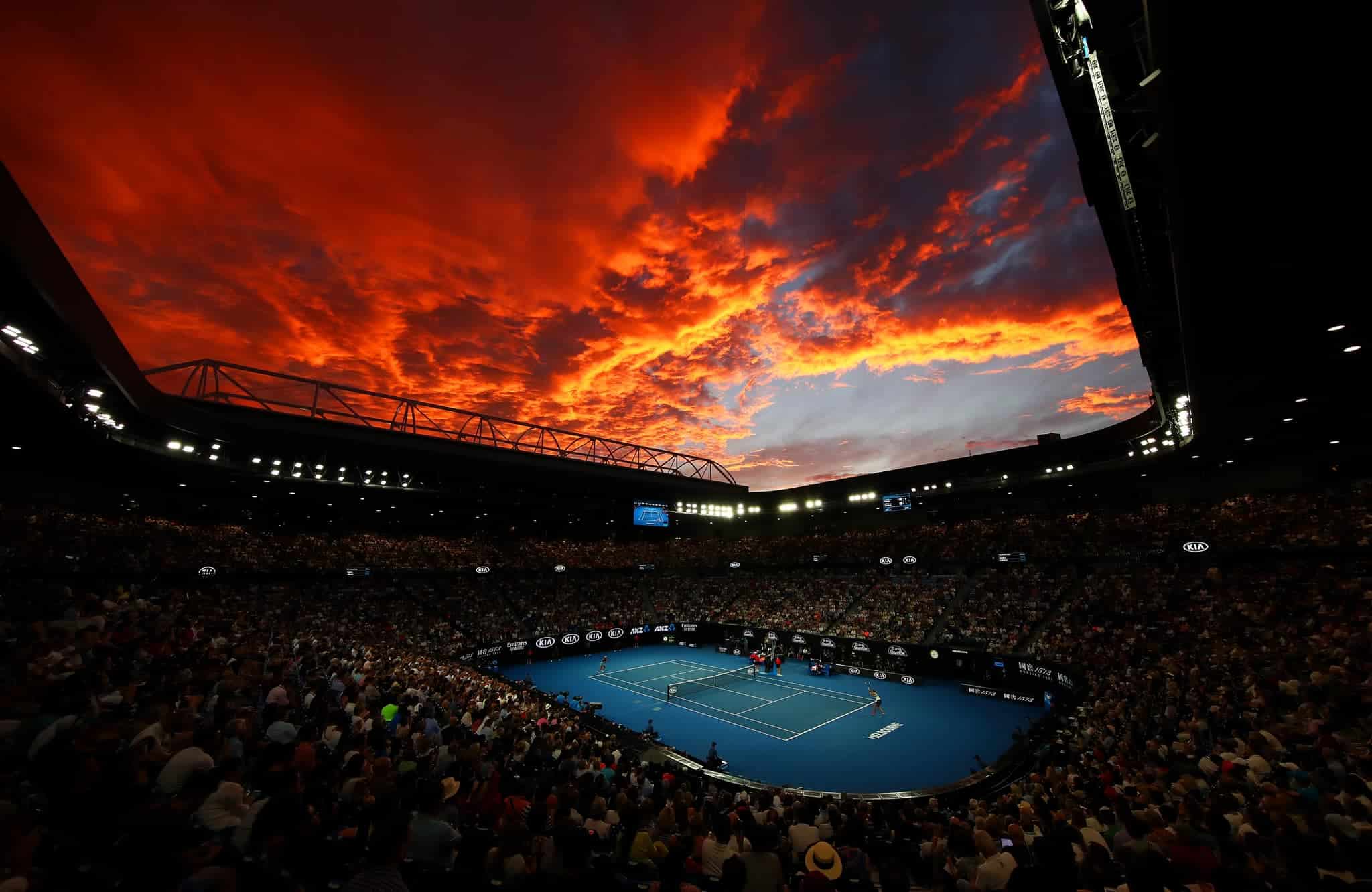
- Carlos Alcaraz (1) vs Novak Djokovic (4)