

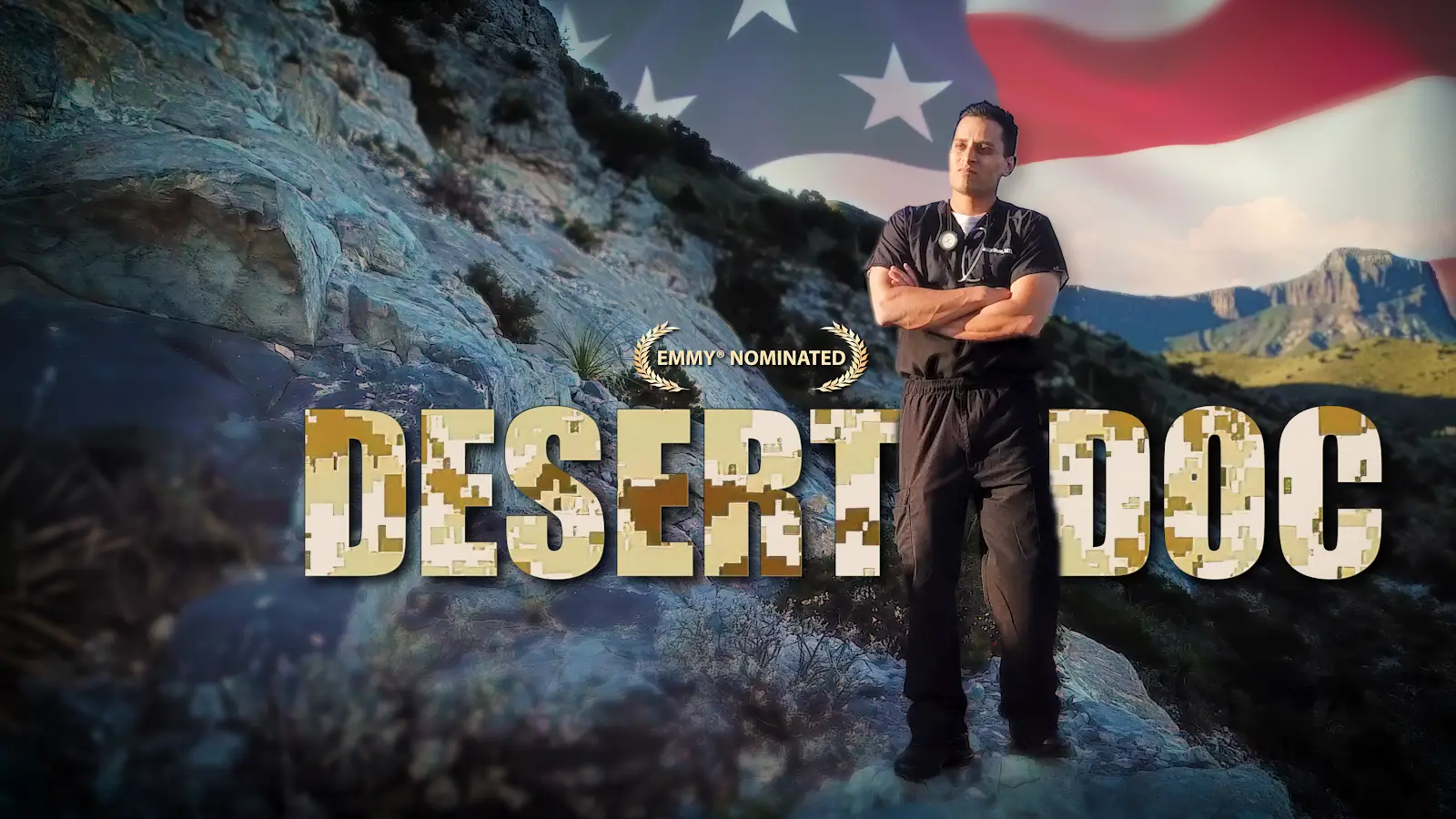
Emergency care changes when distance becomes part of the emergency itself. In large rural regions, medical help is rarely close at hand, and time is often the biggest challenge. Patients can be injured far from hospital, with long transport times shaping every decision. First responders must act quickly while planning multiple steps. These conditions define emergency medicine across much of West Texas.
Desert Doc documents this reality by following real emergencies across a region spanning nearly 38,000 square kilometers. The coverage area is vast, spanning highways, oil fields, remote towns and open country. Emergencies do not occur in controlled settings and access is often restricted. The series captures these moments without reenactments or scripted scenes. What unfolds on screen reflects the unpredictability of real medical response.
Medical Center Hospital in Odessa, Texas, serves as a critical hub within this system. It receives patients from communities spread over great distances. Many arrive after extended transport times that require careful planning and constant communication. Emergency teams must be ready for a wide range of injuries and medical conditions. The hospital’s emergency department works with the understanding that delays are often unavoidable.
Coordination with Odessa Fire Rescue plays a central role in managing this scale. Firefighters and paramedics are often the first point of contact for patients in crisis. Their work involves rapid assessment, stabilization and preparation for transport. Communication with the hospital starts early and continues throughout the trip. This exchange allows emergency staff to anticipate needs before the patient arrives.
Dr. Sudip Bose appears in the series as both an emergency physician and the medical director of Odessa Fire Rescue. His responsibility connects prehospital care with treatment in the emergency department. This dual role provides continuity between field decisions and hospital response. It also highlights the leadership required to manage emergency care across large geographic areas. The series reflects this coordination through real-life cases and real-time decision-making.
The distance also affects how teams work together. When resources are dispersed, cooperation becomes crucial. Doctors, nurses, paramedics and firefighters rely on shared protocols and trust. Each step in care builds on the one before it. The series shows how teamwork makes up for the lack of closeness.
The scale of the region requires adaptability. Weather, terrain and travel time all affect the result. Emergency teams must be flexible while following established procedures. Decisions are often made with limited information and high stakes. Desert Doc captures these challenges through unfiltered access to real-life situations.
Basically, the series is about coordination over great distances. It documents a system where preparation and communication are as important as medical skill. Each answer depends on multiple teams working toward the same goal. Through this lens, the series presents emergency medicine as a collaborative effort shaped by geography.
Desert Doc offers a grounded look at emergency care beyond urban centers. It highlights the reality of providing consistent medical response across an expansive region. By focusing on real cases and real collaboration, the series illustrates how emergency medicine works when distance cannot be ignored.