
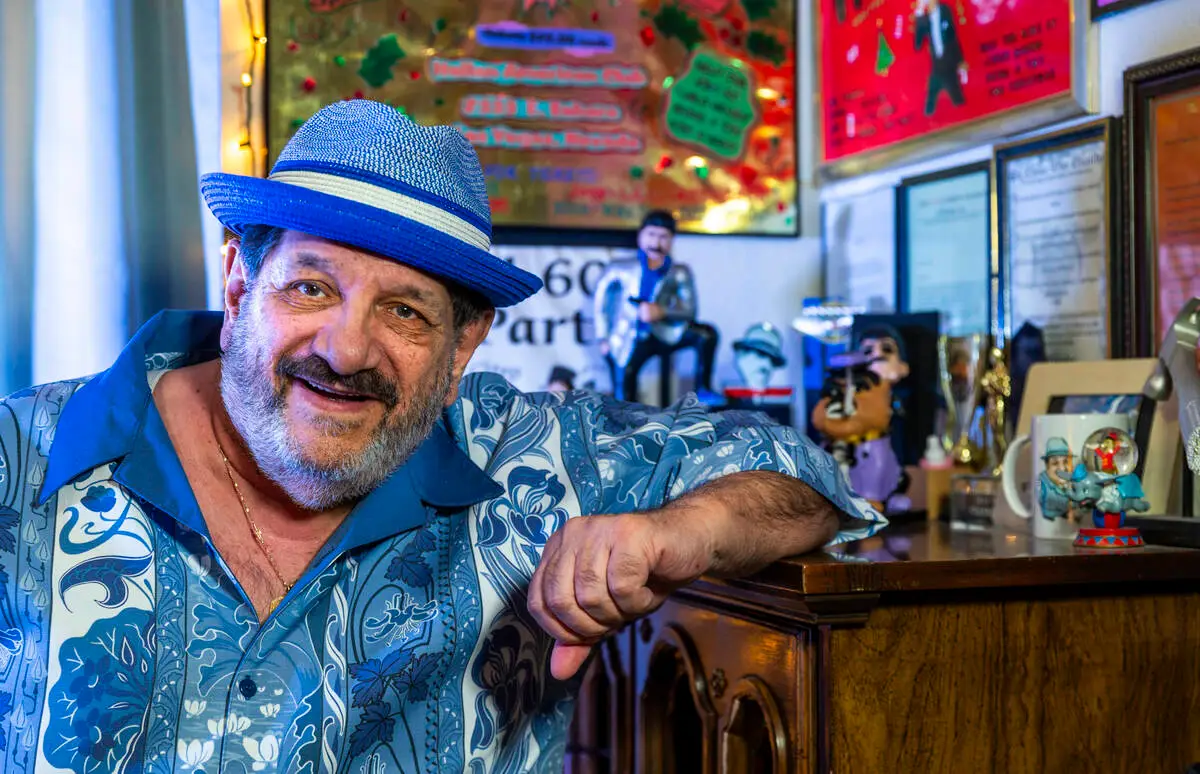
A Las Vegas man’s request to be removed from Nevada’s debarred list has been delayed by a month.
Nevada Gaming Commission Chairwoman Jennifer Togliatti said Thursday that Francis Citro’s request for a delisting hearing, known as the “Black Book,” would be reviewed at a Feb. 26 meeting after commissioners indicated they were reluctant to make a decision on a hearing until after they review the reasons Citro was placed on the list in the first place.
Citro’s attorney, Michael Lasher, filed his request to be removed from the list in November, saying Citro, 80, has changed his life since he was placed on the list on Nov. 21, 1991.
Lasher said in his 10-page petition: “Over the decades, petitioner’s character and reputation have become stellar. He is a reformed man who does good for his community by raising money for charity as an entertainer.”
But Commissioner Abbi Silver said she was reluctant to make a decision on whether to hold a hearing until she learned details about why Citro was placed on the list.
Citro is the first person ever to ask the commission to be delisted, and regulators and the prosecutor’s office did not provide any material from the 1991 hearing when Citro was listed.
Citro, one of 37 people on the list of people banned from entering any of the state’s largest casinos, was convicted of four felonies and listed for having an unfavorable reputation that harms the state’s largest industry.
In the 1991 hearing, commissioners cited an August 18, 1980, racketeering conviction in US District Court in Nevada; one guilty plea on July 31, 1987, to conspiracy to use counterfeit credit cards, also in Nevada District Court; and a February 3, 1986, conviction under the Racketeer Influenced and Corrupt Organizations Act in the United States District Court for the Central District of California. He served a two-year prison sentence and was placed on probation.
Commission staff or lawyers are expected to provide a transcript of the 1991 meeting and commissioners will consider whether he remains a danger to the gaming industry.
Because a decision on whether a hearing was required within 90 days of the filing of the petition, Citro had to agree to waive the 90-day deadline. Lasher consulted with Citro during a break in the meeting and he agreed to the waiver.
–