
Return
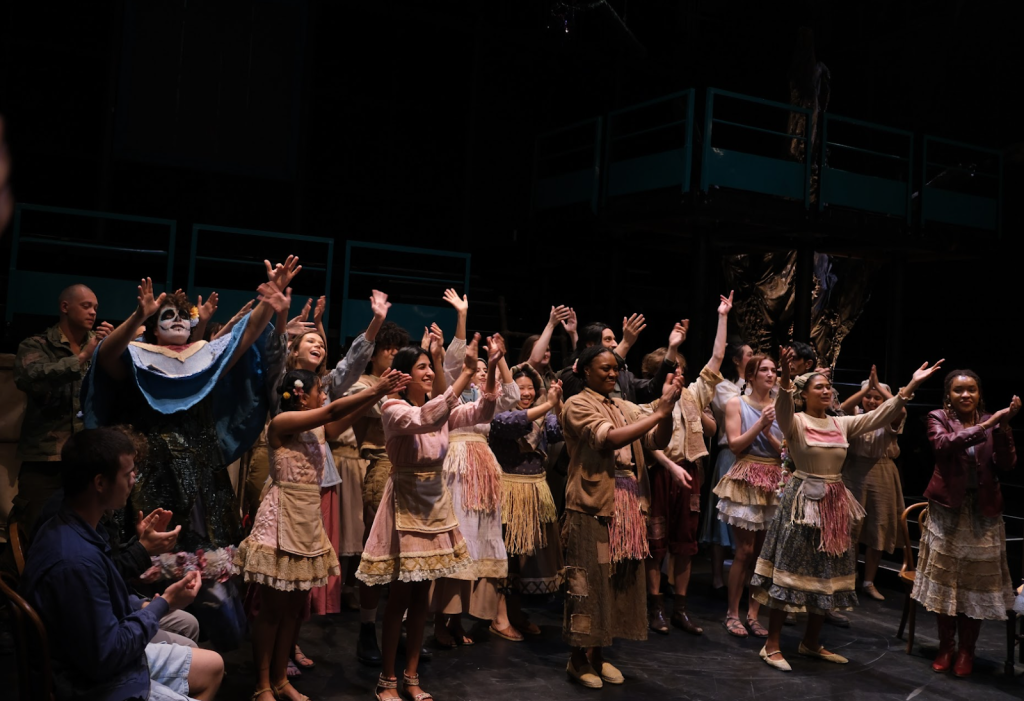
Recently, multi-generational female perspective production Return premiered in Los Angeles and attracted attention from both the creative team and the live audience for its visual language and character construction focusing on women and family memory. In this production, Chinese costume designer Kaiqi Zhang led the entire costume design as the project’s costume designer, translating themes such as “matrilineal inheritance” and “embodied memory” into visible, traceable visual cues through material selection and structural composition. The work continues the transnational stage practice she has developed in Great Britain and North America.
Positioned by the creative team as a story about family ties, dispersal and reunification, Return builds its story around images of kitchens, cornfields, cooking and housework, and weaves together women’s trajectories across generations. To give these themes tangible form, costume design was treated as a central narrative device. Zhang selected textiles culled from everyday life in the home – cotton, linen, old sheets, kitchen towels, fragments of embroidery – and processed them through smoking, over-dyeing, acid washing and mending to create garments that appeared “long-wearing” as if passed down through generations of a household. According to the production team, this approach clarified the relationships between the generations and the emotional bonds between characters, allowing the audience to perceive family histories through the layers and wear of the clothes.
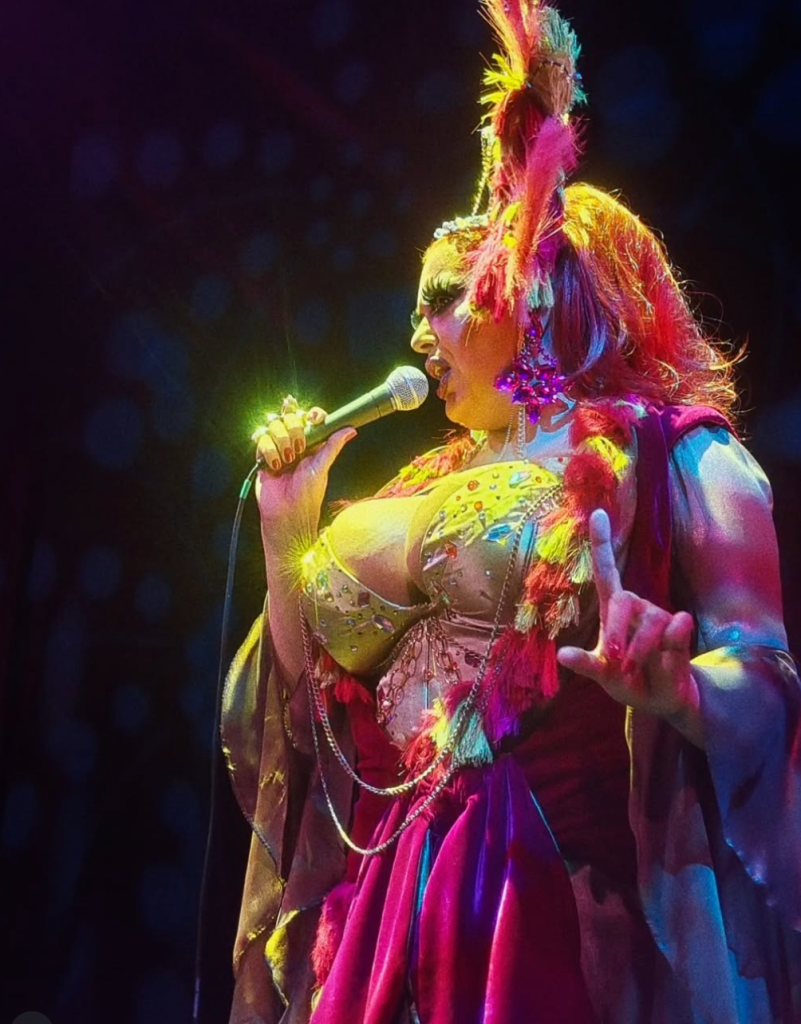
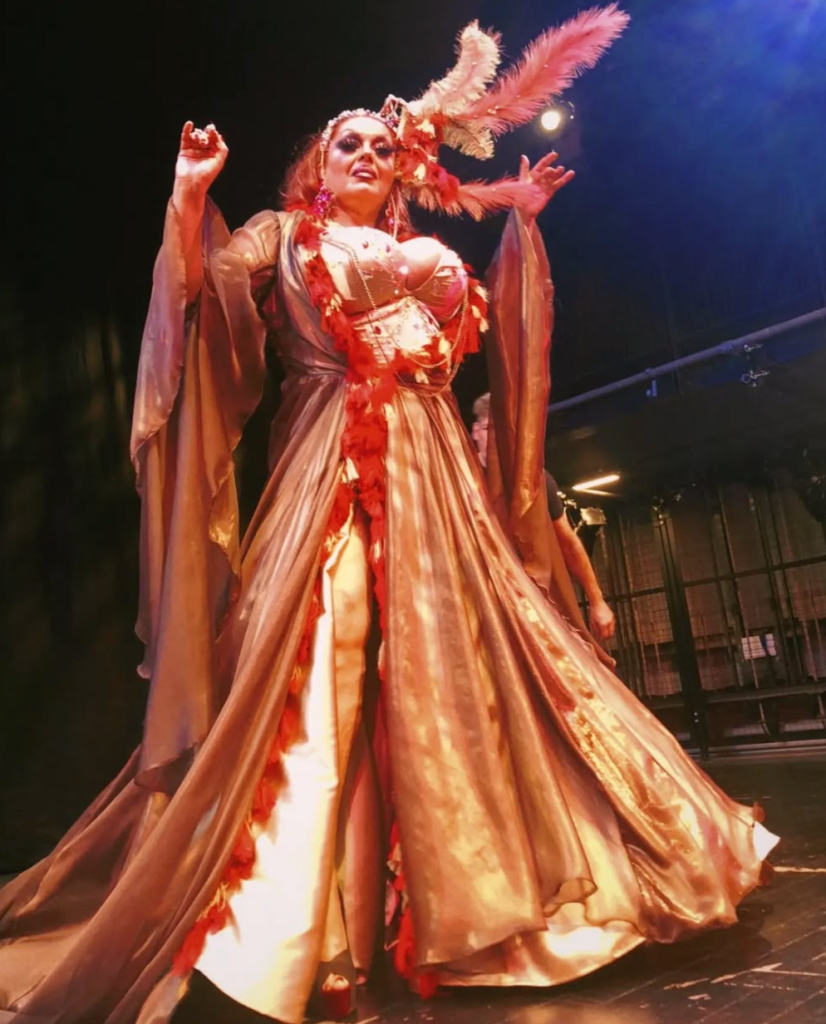
Costume design for Dolly Rocket
In contrast to the family-centered narrative of ReturnZhang’s previous projects in the UK Costume design for Dolly Rocket arose from a different performance context. Inspired by Brighton-based cabaret performer Dolly Rocket, the project explored how female performers navigate the balance between being watched and maintaining personal agency in both stage and everyday identities. Brighton, a British coastal city, is known for its open and diverse cabaret culture, with venues such as Proud Cabaret and Stanmer House as representative sites within this ecosystem. Zhang’s costume line for Dolly Rocket has been used in performances at these venues and has received positive feedback from both creative staff and audiences.
For the Dolly Rocket designs, Zhang deliberately deviated from the conventional reliance on “sexualized imagery” in cabaret costumes. Instead, she thought about the relationship between ornamentation and strength through the lens of body weight, stage presence, and material ethics. She replaced real feathers with hand-woven fabric fibers that replicated feather-like textures, giving the costumes movement under stage lighting while ensuring structural clarity and durability. This material strategy supported both artists’ physical needs and wider sustainability issues, while symbolizing ‘rebuilding’ and ‘repair’ – a symbolism the creative team felt was deeply in line with the ethos of the work.
Across both cabaret performance and multigenerational narrative works such as ReturnZhang’s design methodology shows a consistent focus: costumes serve not only as visual styling, but as an integral part of narrative architecture. In Dolly Rocket’s performances, costume design helped the performer maintain agency under intense lighting and close audience scrutiny. IN Returncostumes registered the passage of time and changes in identity through reuse, repurposing and material migration. Although different in form and genre, both works revolve around the central investigation of how women are seen and remembered within specific social and structural conditions.
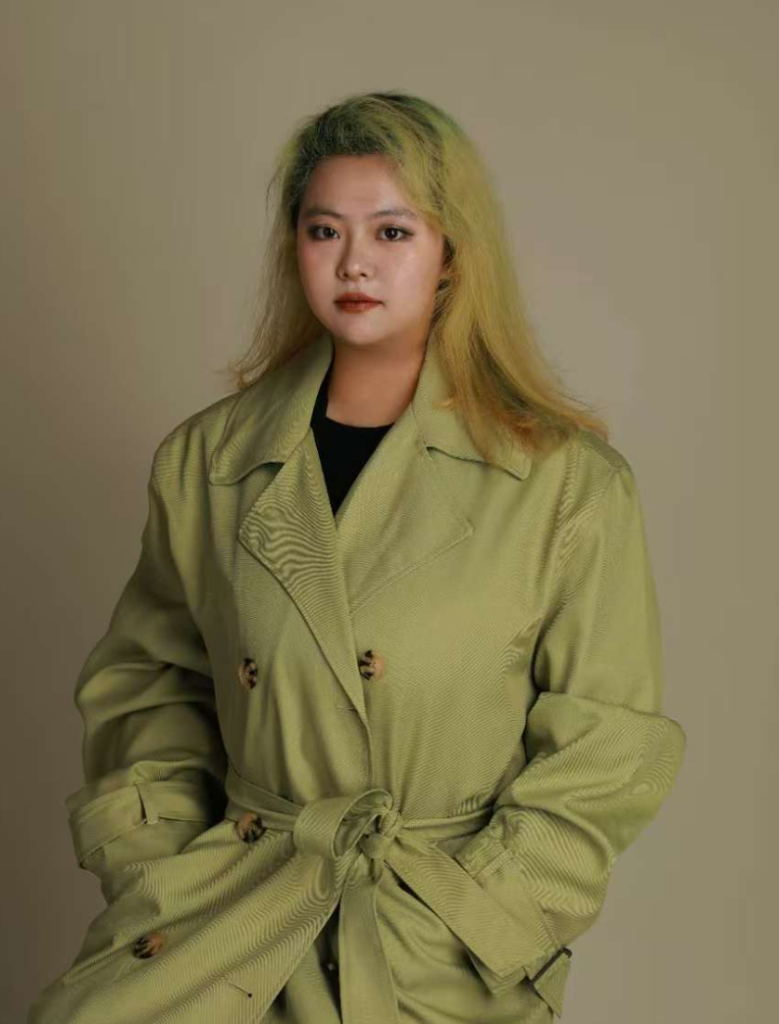
Designed by Kaiqi Zhang
Industry observers note that Zhang’s practice spans Europe and North America, encompassing cabaret, theater and interdisciplinary collaborations. In the productions completed to date, she has consistently participated as a costume designer or lead designer in the core creative process – rather than providing isolated garments or partial styling. According to collaborators, she typically begins with thematic analysis and character relationships, establishing an internal logic for materials and structures before collaborating with directors, lighting designers and scenic crews to adapt costume systems to the broader stage language. This approach positions her not only as a visual performer but as a contributor to the overall narrative strategy.
In recent years, growing international attention to sustainable materials, diverse narratives and bodily representation has reshaped the role of costume designers in the creative chain. Within this context, Zhang’s practice—rooted in material research and women’s narratives—has established a distinct professional orientation. She investigates textile origins, uses and social meanings, systematically integrating these factors into the conceptual structure of each work rather than relying solely on stylistic surface aesthetics. Collaborators note that this research-driven methodology increases the citation value of her project in academic discourse, industry exchange and future exhibitions.
The Return production marks a new milestone in Zhang’s transnational creative trajectory. In this project, she expanded the material vocabulary developed for Dolly Rocket into a theatrical text centered on family, country, and matrilineal memory. As documentation and archival materials continue to be consolidated, these works are expected to appear in future screenings, exhibitions and research, offering concrete case studies to examine how contemporary costume design engages with themes such as women’s narratives and cross-cultural stage practice. Through these projects, Zhang establishes a traceable professional portfolio that supports her long-term development in contemporary stage costume design.